eBook
Agentic AI Is Here—And It’s Changing the Rules of Supply Chain Leadership
Discover how digital agents are transforming supply chains from reactive to real-time—and why the time to act is now.
Download your Guide to the Agentic AI Edge.
Generative AI is everywhere—but for most supply chain leaders, it still feels like a future promise, not a present solution. This eBook changes that.
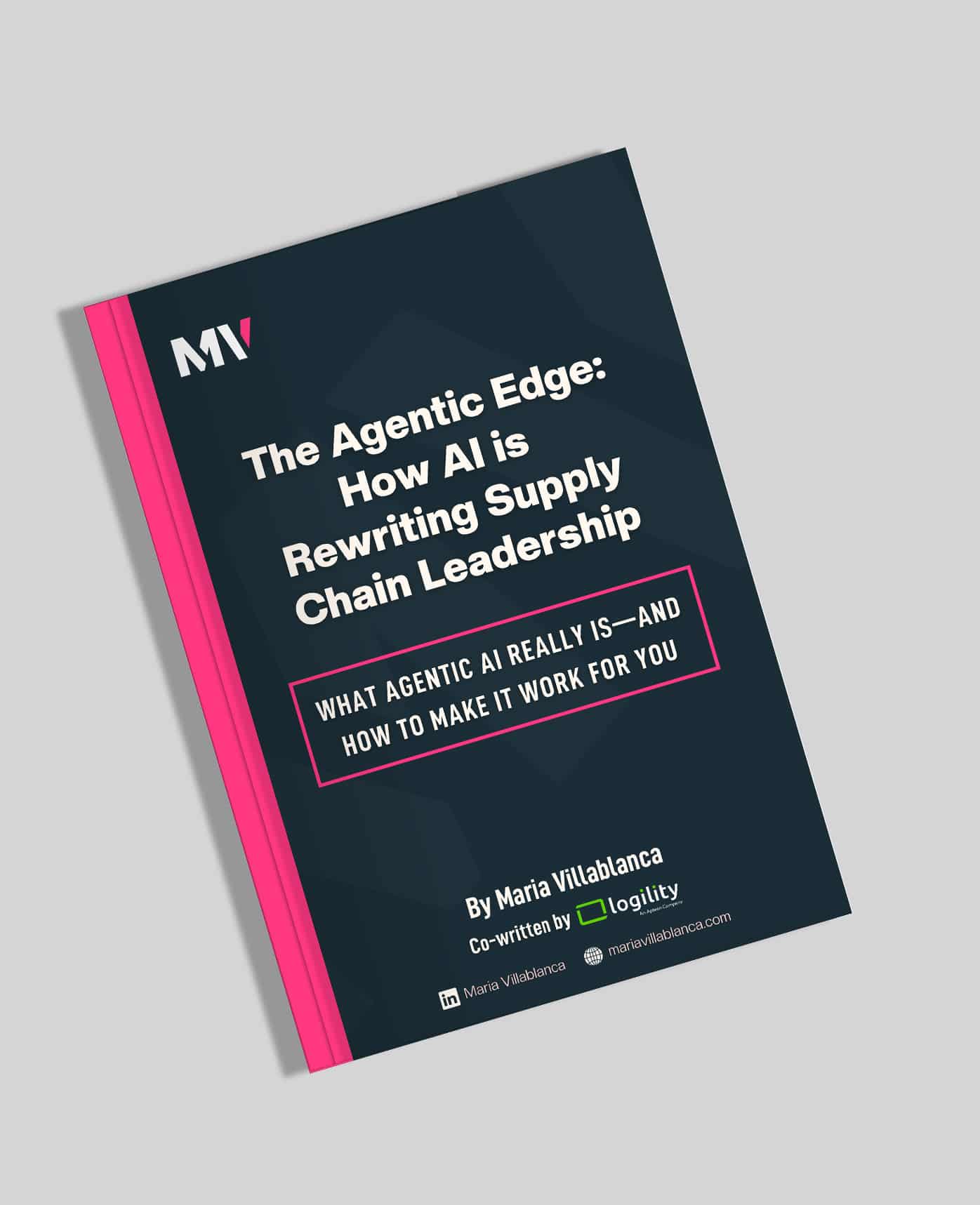
“The Agentic Edge: How AI is Rewriting Supply Chain Leadership” is your essential guide to understanding Agentic AI: a new class of intelligent digital agents that don’t just analyze—they act. These agents make decisions, execute workflows, and continuously learn, helping your team move from firefighting to forward-planning.
Inside, you’ll learn:
- Why traditional thinking—not technology—is the biggest barrier to progress
- What makes Agentic AI fundamentally different from dashboards and alerts
- How leading supply chains are already using agents to reduce costs, improve resilience, and accelerate decisions
- A clear, jargon-free framework to get started—without overhauling your tech stack.
In a world defined by disruption, complexity, and speed, the advantage goes to those who can think and act in real-time. This guide, co-authored by Maria Villablanca, Co-Founder and CEO, Future Insights Network. shows you how.
Frequently Asked Questions
- What is Agentic AI, and how is it different from traditional AI?
Agentic AI goes beyond prediction and reporting. It’s goal-driven, context-aware, and capable of autonomous action—making it more like a digital teammate than a tool.
- How is Agentic AI different from automation tools I already use?
Traditional automation follows static rules. Agentic AI is dynamic—it adapts, learns, and makes decisions based on real-time context and goals. It’s not just faster—it’s smarter.
- How quickly can Agentic AI be implemented in my supply chain?
Implementation doesn’t require a full tech overhaul. Agentic AI is modular and composable, meaning you can start small—deploying agents to solve specific pain points—and scale over time.