For decades, supply chain planners have relied on traditional planning strategies to manage raw materials, goods, and distribution. Tried-and-true processes like Sales and Operations Planning (S&OP), Sales and Operations Execution (S&OE), and Integrated Business Planning (IBP) have served organizations well in stable times with predictable calendars.
However, today’s supply chains are in a permanent state of flux, and organizations that take weeks or months to make decisions within traditional planning cycles can quickly fall out of sync with reality.
What organizations now need is a new approach to supply chain risk management that acknowledges it’s dynamic nature and turns volatility into decisions –creating agile supply chains. The 3 Streams of Planning framework leverages AI to enable organizations to balance day-to-day execution, validate assumptions, and proactively manage threats and opportunities, transforming traditional reactive planning into continuous, insight-driven decision making.
A New System of Continuous Planning
Organizational strategies are designed around the choices an organization makes to achieve its goals related to customer service, growth, and shareholder value. However, in many cases, strategies are created in isolation by different departments and based on separate data sets. This no longer works in today’s era of global volatility, geopolitical turmoil, trade wars, and rapidly changing consumer behaviors. When forecasts fall out of sync with market reality, and organizations take weeks to adjust, it leads to stockouts, overstocking, and missed opportunities.
Fortunately, technology and AI now enable planners to digitally integrate these datasets and significantly improve supply chain optimization. AI functions can help address many of the inherent difficulties of executing a strategic plan by translating the day-to-day actions of the knowledge workers who need to align across all departments. Keeping plans aligned with the underlying assumptions and current data enables the organization to remain nimble and respond more quickly.
Generative AI can help capture KPIs and assumptions, making them understandable and relatable to everyone, translating them for every work in the chain and for every decision. This makes decision-making based on meeting business outcomes instead of arbitrary numbers. Further, AI can help overcome decision paralysis by proposing options and solutions with supporting context.
By integrating these AI capabilities into the 3 Streams of Planning Framework, organizations can make more informed decisions, turning volatility from a threat into a competitive advantage.
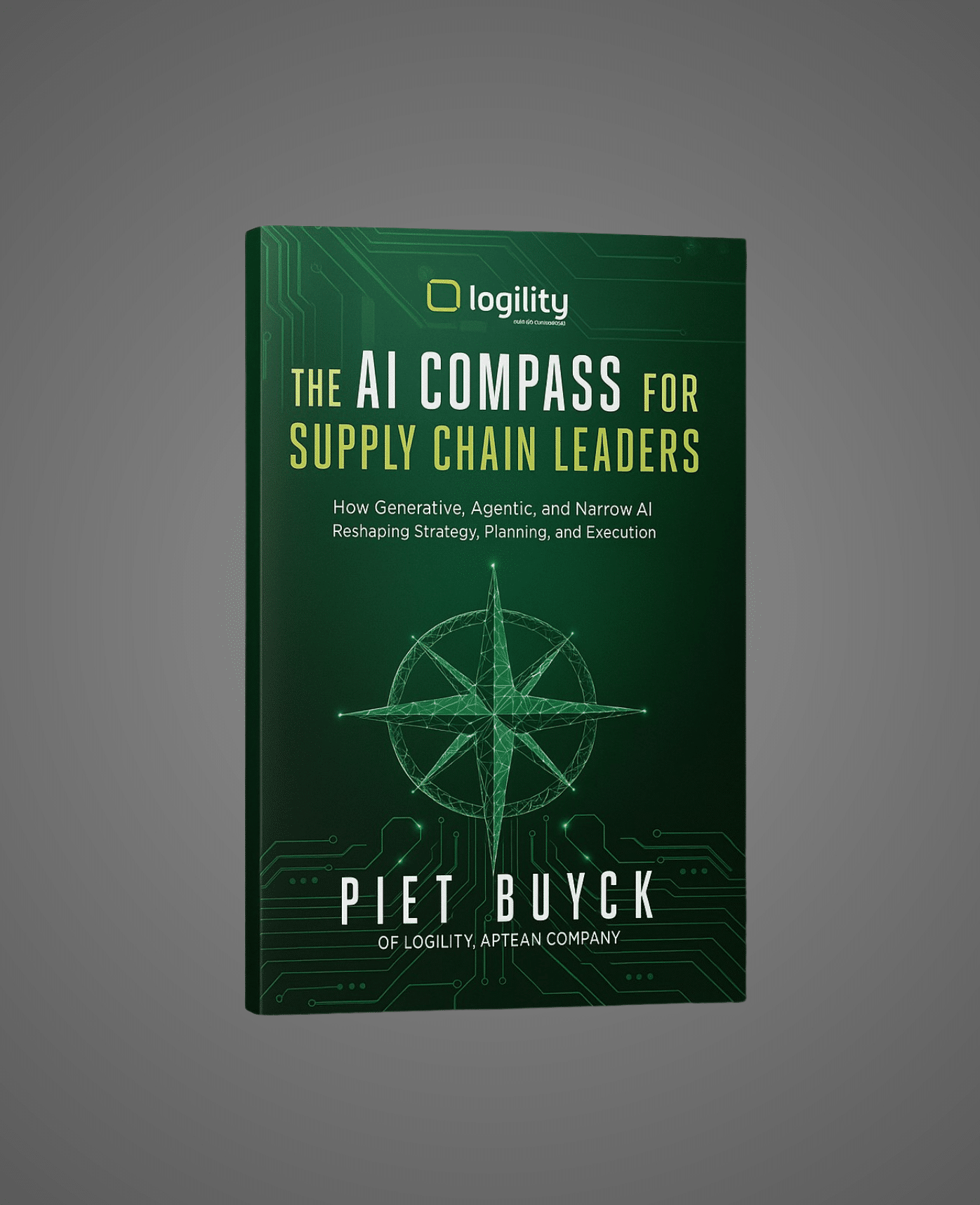
Read Piet’s new book, The AI Compass for Supply Chain Leaders’
The AI Compass for Supply Chain Leaders introduces a bold new approach where artificial intelligence and human insight work hand-in-hand to drive faster, smarter, and more resilient decisions. Drawing on groundbreaking research and real-world applications, this book reveals how leading organizations are transforming their planning processes to thrive in uncertainty.
Get Digital CopyThe Normal Stream: Managing Continuous Flow
The Normal Stream of planning is the default operational path—the continuous flow of goods reaching customers on time, in full, and at the right price and cost. It includes forecasts for the coming weeks and months, with agreed-upon budgets and acceptable variability.
This work was historically buried within S&OE and S&OP review cycles, consuming valuable meeting time for planners, even when everything was running smoothly. However, the new 3 Streams of Planning approach moves this information from routine execution into continuous operational management. It includes producing, delivering, and selling items that fit within established frameworks, while making continuous adjustments between sales, supply chain teams, and inventory management.
By leveraging AI in this stream, organizations can better evaluate events that occur during execution. It offers all parties access to the latest information at all stages of the supply chain, empowering them to make decisions within the normal framework without waiting for the next planning meeting.
It also eliminates the biased decision behaviors that have typically plagued supply chain planning. In the traditional process, a sales team might set a budget of 30 widgets, then tell finance they only need 20 to overshoot their goals, while telling the supply chain they need 40 to ensure they have sufficient stock. While this has been a common practice for decades at many organizations, it is costly and potentially leaves opportunities on the table.
In the new model, all information, including customer details, actual orders, and relevant data, is made accessible to all teams in formats they understand and can work with. This transparency eliminates disparate forecasts across departments, enabling management to continually monitor emerging risks and opportunities. As the system learns from its own behavior, it consistently improves baseline understanding and allows teams to focus more on meaningful exceptions than confirming routine events.
The Assumptions Stream: Making the Invisible Visible
Plans are built on forecasts and assumptions about things like promotional lift, competitive positioning, price elasticity, inflation rates, lead times, and customer behavior. However, in traditional planning, these assumptions are largely invisible, buried in spreadsheets and understood only by individuals. The Assumptions Stream makes these critical foundations explicit and measurable, enabling continuous monitoring.
This stream also operates by asking fundamental questions at regular intervals—whether the assumptions are still correct, whether they need adjustment, and whether they still meet the targets. Common questions can include things such as:
- Is the promotional lift still the same, or is competition gaining traction?
- Do the new products deliver what was expected
- Are industry indexes reacting as anticipated?
- Is inflation in check?
- Is pricing correct?
AI can be especially helpful in this stream, continuously monitoring the assumptions and comparing them against incoming data. The system surfaces early flags as deviations emerge and turns potential surprises into manageable adjustments, enabling the plan to evolve and respond to events promptly, before failures occur.
New information can also trigger event-driven meetings to determine next best actions. Unlike traditional monthly reviews that focus on explaining past performance, this approach enables departments to collaborate in a forward-looking manner. Teams can work to eliminate unaccounted-for revenue gaps before they lead to frantic error-chasing.
The Assumption Stream also drives alignment across cross-functional teams by sharing the same assumptions and real-time monitoring data. For example, if inflation influences demand differently than expected, the organization can quickly bring together sales, marketing, and finance to collaboratively adjust the plan, with everyone working from the sales digital insights. Planners move from treating assumptions as static inputs to viewing them as a “living hypothesis” that is continuously validated and adjusted.
The Risk & Opportunity Stream: Building Anti-Fragility
The Risk & Opportunity data stream continually scans for opportunities and threats. It tracks information like competitor actions, promotional activities, supply constraints, tariff changes, and geopolitical shifts. It also promotes anti-fragility by preparing responses in advance and positioning the organization to benefit from volatility.
Anti-fragility is a state where supply chains not only withstand but also benefit from volatility by assessing and capitalizing on change. Management can use this stream to consistently map risks and opportunities by asking critical questions such as how risks may impact the organization, what it can do to address those risks, and whether there is a potential competitive advantage in doing so.
There are many real-world examples that can help illustrate the power of this stream. For example, home decoration categories surged during the pandemic, prompting retailers to secure capacity wherever they could. However, this capacity wasn’t necessary the following year, and organizations that correctly attributed the unusual surge to specific pandemic-related factors could respond more effectively when conditions later changed. Another example is the life sciences sector. Companies that identified competitor stockouts as opportunities and gathered information at the source could take immediate action to increase supply and promote their products to capture market share. Additionally, tariff changes also reflect economic conditions that could pose risks in some established markets while offering opportunities in others.
By using historical insights and digital building blocks from the Normal Stream, management can validate new assumptions and remake plans in hours rather than having to rework all the numbers from scratch. When alerts are triggered, the system presents playbooks and decision options that enable faster response to both opportunities and threats.
The Path Forward: Continuous Intelligence and Better Decisions
By using these three streams of planning and AI, organizations build an agile supply chain to prevent blind spots by design and offer decision-makers a continuous picture of execution, expectations, and events. Fortunately, organizations can adopt this framework incrementally and modernize their planning without having to rebuild existing systems. This results in faster, more informed decisions that convert volatility from a threat into a competitive advantage.

Written by
Piet Buyck
SVP, Solution Principle

Short bio
Piet Buyck is a global technology executive with over 30 years of experience in managing and positioning high-value IT applications that disrupt current practices. He is well-known as an influential and strategic business thought leader and entrepreneur with significant achievements and expertise in artificial intelligence, demand sensing, and demand planning.